
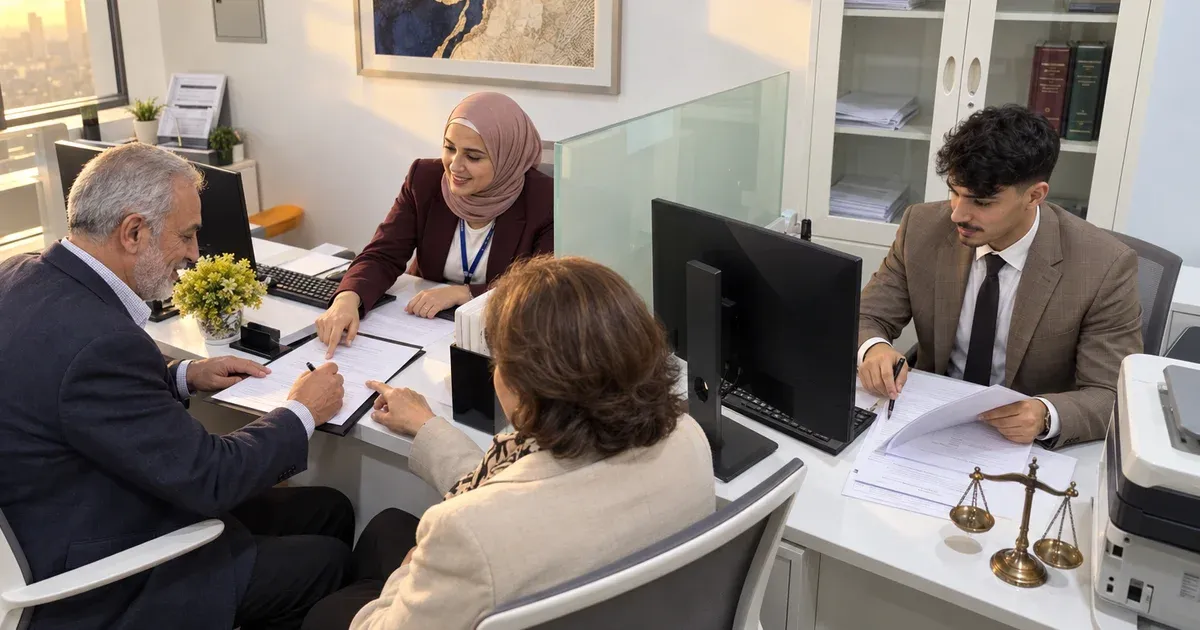
The ADJD register at work
The register in Abu Dhabi is the Civil Wills Section of the Abu Dhabi Judicial Department, operating under Abu Dhabi Law No. 14 of 2021 as amended. Registration turns a signed draft into an ADJD-certified will on the official record — so the family later faces a filed document instead of an argument. Eligibility is checked first, against both the statute and the section’s stated practice, since the two do not fully agree on who may register; no fee is paid until that read is done.
Portal filing and published fees
The application itself is submitted through the ADJD portal, by the testator or a representative holding a power of attorney limited to making wills. The department reviews the file, the fee is paid — AED 950 for a regular will and AED 2,500 for a special will as published, with the applicable tier confirmed with the section since no definition of the higher tier is published — and a probate appointment is booked.
Video appointment and document set
That appointment runs by video conference as standard, with an in-person option at the Wills Registration Office, and ends in certification and notarization onto the record. The document set behind it: Emirates ID and passport with copies, the drafted will with copies for all parties and the record, and proof of ownership for each bequeathed asset. Papers not in Arabic need certified translation; foreign-issued papers need attestation.
Who registers here — and who should look elsewhere
Resident families, spouses preparing mirror wills, property owners holding deeds, and parents naming guardians inside the will form the core of who files. Registration alone, though, distributes nothing by itself: that runs through the Civil Family Court, which can appoint an administrator and issue distribution orders. Families rooted in Dubai usually belong on DIFC wills registration instead, Muslim testators need an eligibility check first, and estates already in court need probate rather than registration. The Abu Dhabi services hub lays out the emirate’s full set of routes side by side.
What registration puts on the record
A signed draft becomes an ADJD-certified will on the official record, so your family faces a filed document instead of an argument.
Eligibility checked first
We check your position against Abu Dhabi Law No. 14 of 2021 and the Civil Wills Section's stated practice before you pay any fee, so the two positions never surprise you at the appointment.
Documents to the checklist
Emirates ID, passport, the drafted will with copies for the parties and the record, and proof of ownership for each bequeathed asset are assembled against the current checklist, with translation and attestation arranged where needed.
Online application filed
We file the application through the ADJD portal and track the department's review, handling the fee step once the correct tier is confirmed with the section.
Probate appointment prepared
The probate appointment runs by video conference as standard, and we prepare you for exactly what happens there, from identity verification to certification and notarization of the will.
When this service is not what you need
An honest word before you file, because the wrong route costs a fee and a month.
You have no signed draft yet
Registration files a finished draft. If your wishes are not yet written down, start with our will draft preparation service and return here when the draft is ready.
You are a Muslim testator
The statute behind this route is written for non-Muslims while the section states a broader position, so eligibility needs a careful check first. Start with our Muslim wills service for an honest read of your position.
Your life sits in Dubai, not Abu Dhabi
Families whose assets and children sit in Dubai usually belong on the DIFC Courts route instead. We advise the fit before drafting, so ask us which register suits your case.
The estate is already in court
If a death has occurred and assets need releasing, registration is behind you and court process is ahead. Our wills probate section covers the grant, administration, and distribution steps.
Who registers here
The families who most often file a civil will with the ADJD Civil Wills Section.
Abu Dhabi resident family
Non-Muslim foreigners living in Abu Dhabi who want their will on the emirate's own official record under Law No. 14 of 2021.
Chat About Your CaseSpouses needing mirror wills
Couples who want two matching wills, one per testator, each registered in its own file with the section.
Chat About Your CaseAbu Dhabi property owner
Owners of apartments or villas in the emirate who hold deeds to prove and bequests to direct before the file goes in.
Chat About Your CaseParents naming guardians
Parents who want interim and permanent guardians for minor children recorded inside a registered civil will.
Chat About Your CaseFiling with support or on your own
The portal is public and anyone may file alone. The difference is preparation, and preparation is what appointments turn on.
| Aspect | With SRAG | On your own |
|---|---|---|
| Eligibility check | We reconcile the statute with the section's stated practice for your case before filing. | You read two statements that do not fully agree and guess which applies to you. |
| Fee tier | We confirm whether the regular or special tier applies with the section before you pay. | You choose between two published fees with no published definition of the higher tier. |
| Document set | Your file is checked against the current checklist, with translations and attestations arranged. | You assemble identity, will copies, and asset proofs and learn of gaps at review. |
| Portal filing | We file through the ADJD portal, track the review, and respond to queries on the file. | You file, watch the inbox, and interpret department queries yourself. |
| Appointment day | You join the video appointment knowing the sequence and holding the right papers. | You join cold and handle certification questions as they come. |
| After certification | We confirm the certified will is on the record and your copies are complete. | You confirm the record yourself and chase anything missing. |
Eligibility check
With SRAG
We reconcile the statute with the section's stated practice for your case before filing.
On your own
You read two statements that do not fully agree and guess which applies to you.
Fee tier
With SRAG
We confirm whether the regular or special tier applies with the section before you pay.
On your own
You choose between two published fees with no published definition of the higher tier.
Document set
With SRAG
Your file is checked against the current checklist, with translations and attestations arranged.
On your own
You assemble identity, will copies, and asset proofs and learn of gaps at review.
Portal filing
With SRAG
We file through the ADJD portal, track the review, and respond to queries on the file.
On your own
You file, watch the inbox, and interpret department queries yourself.
Appointment day
With SRAG
You join the video appointment knowing the sequence and holding the right papers.
On your own
You join cold and handle certification questions as they come.
After certification
With SRAG
We confirm the certified will is on the record and your copies are complete.
On your own
You confirm the record yourself and chase anything missing.
Why SRAG Wills for ADJD Will Registration
Registration is an administrative file that rewards exactness. Our team prepares it the way the section expects to receive it.
Route advice before drafting
Our team advises whether your family belongs on the ADJD route or the DIFC route before any drafting begins, so the will is written for the register that will hold it.
Prepared to the checklist
We assemble every document to the authority's current checklist, including certified translation and attestation of foreign papers where needed.
WhatsApp-first contact
You reach an advisor on WhatsApp with same-day replies, and one point of contact carries your file from first call to certified record.
End-to-end follow-up
We track the portal review, handle the fee step, prepare the probate appointment, and follow up until the will is on the record.
How registration works
Document check
We check your draft, identity documents, and asset proofs against the ADJD checklist before anything is submitted.
Application filed
We file the application through the ADJD portal, track the review, and handle the fee step.
On the record
At the probate appointment the will is certified and notarized onto the ADJD record — you keep the certified copy with your signed draft.
Register your will with ADJD
Draft in hand? We take it from there — application, fee, appointment, and follow-up.
We respond within one business day.
Disclaimer: SRAG Wills is a wills consultancy, not a law firm or government body. Registration is completed with the DIFC Courts Wills Service or ADJD; Muslim wills, and estate and inheritance cases, are filed with the Dubai Courts.